
FAQs
- Preserve and celebrate the legacy of Historic Black Wall Street and the spirit of African American entrepreneurship, as well as build generational wealth.
- Promote sustainable infill economic development that builds on the once thriving commercial districts.
- Focus on underutilized parcels throughout that offer opportunities for infill, intensification, and adaptive reuse.
- Introduce much needed housing in a manner that limits fears of displacement, including housing affordable to all income levels to help alleviate the city’s cost burden.
- Bridge physical divides and counter past isolation through improvements that lead to a pedestrian-friendly environment, safe crossings and streets, enhanced transit connections, and visual access.
- Deliver a Public Realm and Public Space Plan that creates a network of public spaces that tells the stories of this neighborhood, while offering a comfortable, vibrant, and historically resonant urban landscape central to making the legacy of Greenwood come alive.
- A nationally proven track record in planning, designing, and building (and rebuilding) compelling urban places and sustainable communities.
- Experience in neighborhood planning that results in catalytic development and implementation.
- An extensive toolkit of public participation and outreach methods, customized to meet the needs, expectations, and capabilities of the project’s distinct stakeholder groups.
- Experience gained from working in numerous African American communities around the country who have faced similar challenges to sustainable development.
- World Won Development, a local engagement partner
- TSW, Tulsa-based design firm
- P.U.M.A (Progressive Urban Management Associates), economic advisors
- Studio Zewde, a Harlem, NY based firm who will support an approach to historic interpretation.
- Recommended Development Program: that is economically sustainable.
- Land Use/Zoning Recommendations: for land use throughout the Study Area, to include recommendations for density and transitions to and from surrounding uses.
- Urban Design Standards: Recommendations for ensuring high quality urban design while maintaining flexibility and allowing for creative, incremental development.
- Parking: Identification of opportunities and/or needs for structured parking, particularly shared opportunities which can reduce the cost of development and maintain density.
- Transportation and Infrastructure: Recommendations for street grid patterns and design, focused on reconnecting to the existing neighborhood and multi-modal transportation options that allow for public transit, walking, and cycling.
- Public Realm and Public Spaces: Recommendations for public realm enhancements and public spaces which will highlight the history of the neighborhood, create and maintain a strong sense of community, and enhance the long-term economic viability of a mixed-use neighborhood.
- Policy Recommendations: A set of policy recommendations which will ensure that the redevelopment of the area meets the goals of the City and vision of participants in the plan. Policy Recommendations shall include but are not limited to:
- Long-term ownership, governance, and oversight of redevelopment.
- Long-term neighborhood and district investment and promotion.
- Tools for maintaining an affordable, diverse neighborhood.
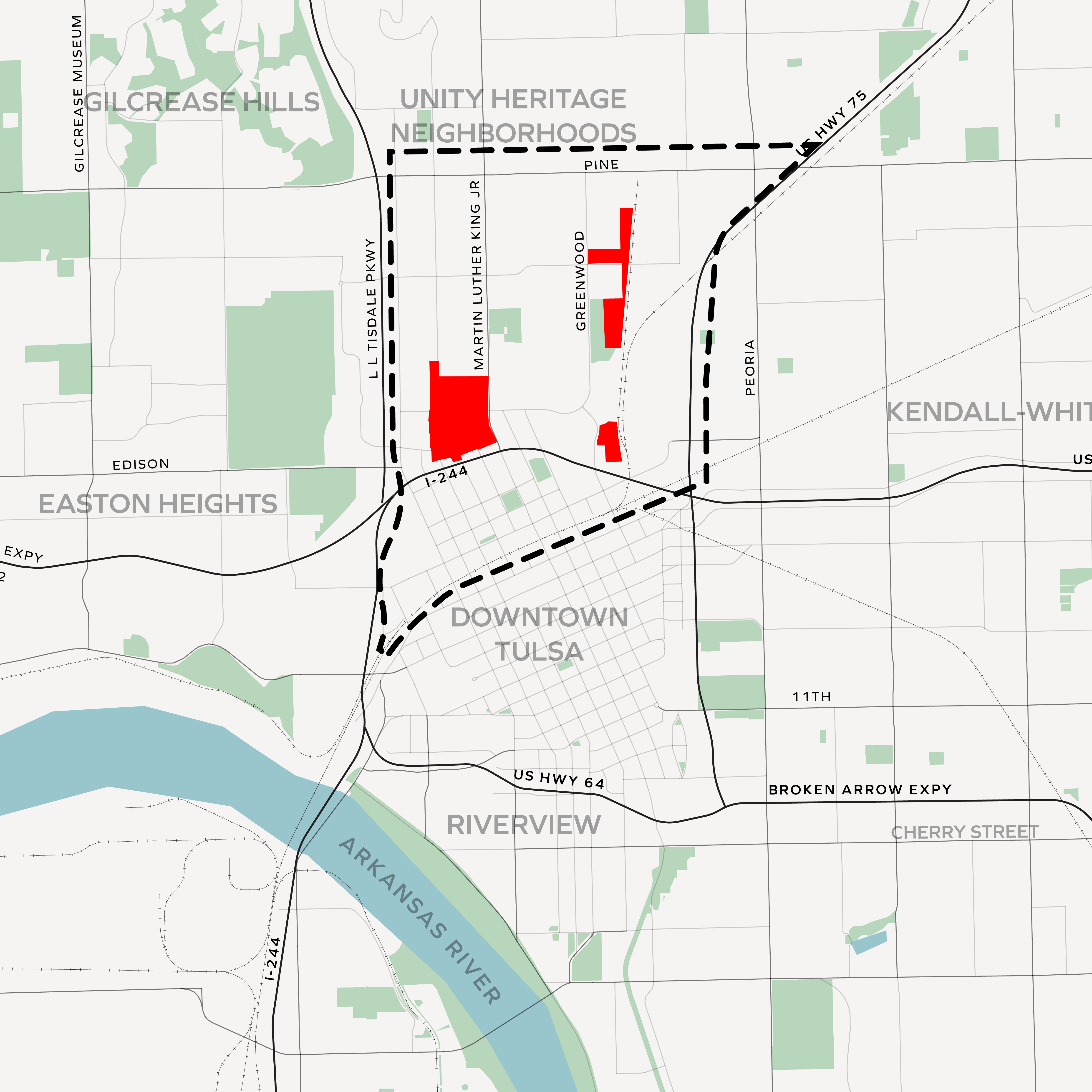
What are the boundaries for this study?
What is a master plan?
A Master Plan is a comprehensive, action-oriented plan for an area that addresses land use, mobility, urban design, environment, infrastructure, housing, economy, tourism, community health, and resiliency. When adopted, the Master Plan becomes the community’s framework for development and other improvements in the area (e.g., preservation of open space or changes to existing regulations).
The conceptual Master Plan will provide strategies for incremental development with a mix of uses, reflecting the planning and economic context of the area and should serve as a model for equitable and inclusive development. While the plan will include drawings illustrating a vision for community supported concepts, they will not include architectural and engineering specifications.
Additionally, the Master Plan will make key recommendations related to the long-term ownership of the sites under study and the governance structure for future development and redevelopment, with the goal of identifying structures that will support the goals of the Plan.
What are the goals of this study?
The Kirkpatrick Heights Addition & Greenwood Site Master Plan will create a vision and an action-oriented redevelopment strategy to guide the area’s growth. Preliminary goals include:
Who is leading the process?
The Master Plan is being led by the City of Tulsa Mayor’s Office, in partnership with the Tulsa Authority for Economic Opportunity and Tulsa Development Authority.
The City has engaged WRT a planning and design consultant to assist the City and stakeholders in leading the Master Plan process.
WRT is a planning and urban design firm that has been invested in designing resilient communities for more than 50 years, demonstrating with each project that growth can be guided in a sustainable and equitable manner that not only promotes economic vitality, but also honors natural and cultural resources, builds community wealth, and enhances community identity and quality of life.
To this effort WRT brings:
In addition to WRT, the consultant team brings local and national experience in urban design, public spaces, planning, and economic development. The consultant team includes:
How was the consultant team selected?
In January 2020, the City released a Request for Proposal (RFP) RFP 20-711, Kirkpatrick Heights Addition and Greenwood Site Master Plan”, to secure professional services to provide a Master Plan for publicly-owned property.
The process was led by a selection committee consisting of city staff, elected leadership, and community stakeholders who evaluated proposals. Respondents were rated based on a number of factors including proposed project approach and methodology; respondent’s experience in similar projects, contexts, and communities, and an understanding of project objectives, project issues, and the proposed scope of work.
Is there a steering committee of stakeholders and community residents?
Yes. The Leadership Committee will represent the full range of interests and meet on a regular basis to critically review work products at each step of plan formation and serve as a sounding board for new ideas to ensure that plan content reflects the values of stakeholders and the Tulsa community, and to serve as a creative force to develop innovative ideas for the Kirkpatrick Heights Addition/Greenwood area.
How were the members of the Leadership Committee selected and what are their roles?
There are 11 members of the Leadership Committee who have been appointed by Mayor G.T. Bynum based upon their current and past leadership in Greenwood and North Tulsa. Leadership Committee members will serve as a key working group and ongoing community ambassadors, leveraging their relationships and networks to engage residents and stakeholders in the project. Leadership Committee members will have critical oversight over project strategy and direction, and will meet at scheduled intervals throughout the project, reviewing project components and reports in advance, and providing feedback and guidance to the consultant team and staff to ensure the project reflects community desires and expectations.
What is the role of the public in this process and how can I get involved?
The team has designed a robust resident and stakeholder engagement strategy with multiple feedback loops to ensure authentic and effective engagement. This will include hands-on workshops, stakeholder interviews, open houses throughout the process.
How is this Master Plan process funded?
The Master Plan process is funded by the City of Tulsa. The process and final Plan will identify implementation funding strategies to ensure recommendations are actionable.
How does this master planning effort relate to the Evans Fintube and other City led projects?
The City of Tulsa’s economic development staff, represented by the Tulsa Authority for Economic Opportunity (TAEO), are supporting both this Master Plan process and the Evans-Fintube redevelopment solicitation process. As efforts related to the Request for Proposals for the Evans-Fintube site advance, TAEO staff will facilitate community engagement efforts with finalist development teams, which will offer an opportunity for the community to provide feedback on how the sites should connect and relate to one another. Additionally, TAEO staff will be providing regular updates to the Leadership Committee on the status of the Evans-Fintube project, and engaging the Committee in advance of key project decision points.
How will the Master Plan be approved, and by whom?
We intend to present the Master Plan as an amendment to Tulsa’s Comprehensive Plan. This will involve a presentation of the draft Master Plan to the Tulsa Metropolitan Area Planning Commission (TMAPC) at a work session for discussion, followed by a subsequent presentation at a Regular Meeting of TMAPC for adoption at a public hearing. The Master Plan would then be transmitted to the City Council for consideration and approval, which would include additional discussion in Committee and at a Regular Meeting of the City Council.
What will the final Master Plan look like?
The final report shall include a set of recommendations
These shall include but are not limited to:
When completed, how will the recommendations be implemented?
Following the development of the Master Plan, the City will begin by implementing the ownership and governance recommendations. Once in place, this governance structure will move forward with incremental development. Additionally, it is expected that the City and Tulsa Authority for Economic Opportunity will move forward with establishing critical public incentives, such as a Tax Increment Finance (TIF) District, following completion of the Plan.
What is the timeline for implementation of the Master Plan?
The Master Plan is expected to undergo a full 12-month process to consider the needs of the boundary area as well as enough study to exercise the Highest and Best use of the property within the boundary lines.
How will projects in the Master Plan be funded?
Implementation of the plan will require a variety of funding sources and public financing tools. The City and Tulsa Authority for Economic Opportunity (TAEO) expect to develop and deploy a suite of tools and programs to support implementation of Plan recommendations, to include consideration for tools such as Tax Increment Finance (TIF) Districts, Business Improvement Districts (BID), bond finance, revolving loan programs, federal grant programs, and future local capital improvement funding.